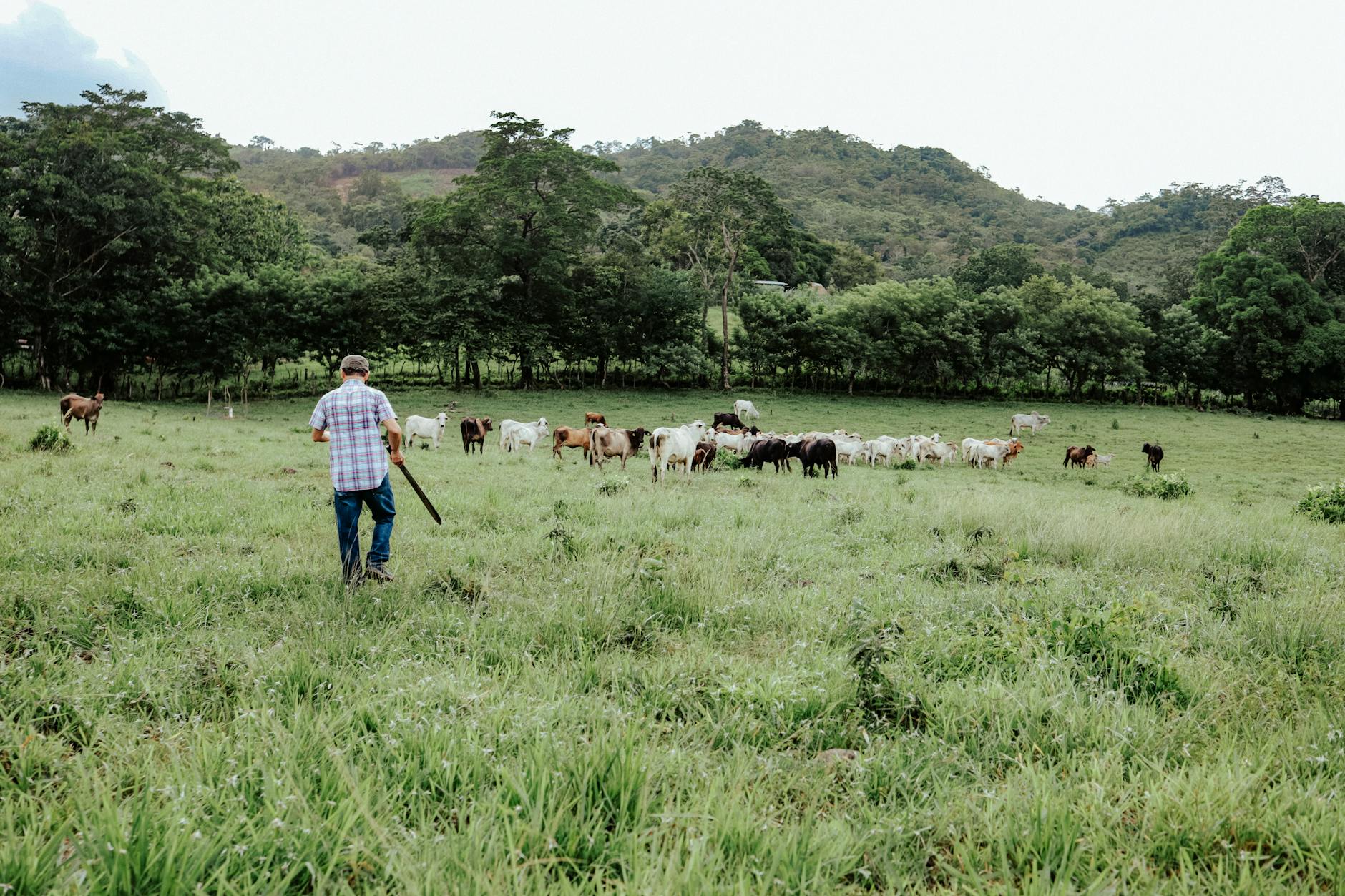
Across agriculture biodiversity has become a shared language.
We talk about soil health, ecosystem balance, resilience. We’ve seen the spade in the ground: diversity within our farming systems allows them to adapt, and thrive over time.
Monocultures might look efficient on the surface, but they are inherently fragile. They rely on control, inputs, and constant intervention to sustain themselves; an ever vulnerable position as we see growing instability in our weather, soaring costs of inputs and shrinking margins. Diverse systems, by contrast, hold their own intelligence. They evolve with the changing landscape.
This is widely accepted when we’re talking about the land. Less so when we’re talking about people.
Neurodiversity refers to the natural variation in how human brains process, think, communicate, and respond to the world around us.
It includes ADHD, autism, dyslexia, dyspraxia, and many other cognitive profiles; but more importantly, it reflects a simple truth: there is no single “right” way for a brain to work.
Some people think in patterns.
Some in detail.
Some move quickly between ideas.
Others need time and depth.
These variations are where our value sits, none is universally superior. All have worth.
Agriculture has always attracted a wide range of cognitive styles.
It asks for observation, intuition, problem-solving, and the ability to respond to changing conditions. It rewards those who can notice subtle shifts in weather, soil, livestock behaviour, and act accordingly.
Many of the strengths often associated with neurodivergence lend themselves to these demands:
- Pattern recognition
- Deep focus on areas of interest
- Practical, hands-on problem solving
- Innovative thinking outside conventional structures
- A preference for autonomy and meaningful work
In many ways, the sector has been quietly shaped by neurodiverse minds for generations.
But while the work itself may fit, the systems around it often do not. As agriculture becomes more formalised, through education pathways, organisational structures, funding requirements, and knowledge exchange; we’ve seen a narrowing of what is considered a “valid” way of working.
Meetings that rely heavily on verbal processing.
Events that overwhelm the senses.
Recruitment processes that favour confident self-presentation over practical ability.
Systems that reward speed, consistency, and linear thinking above all else.
None are intentionally exclusive. But they are often designed with limited awareness of how readily different cognitive styles can access them.
We’re starting to see some acknowledgment of the need for adjustments based on individual needs. but there’s a bigger conversation to be had here. Rather than asking neurodivergent people to learn to adapt, we need to start interrogating our systems from an inclusive lens, and determine; are they still fit for purpose?
We’ve spent decades learning how to restore diversity to our land. There is an opportunity now to extend that same thinking to the people within our sector. We need systems that are genuinely resilient, adaptive, and capable of meeting the challenges ahead.
Because diversity, whether in soil, ecosystems, or human minds; is rarely the problem. More often, it’s the solution we haven’t fully recognised yet.


Leave a Reply